Composing…
/Chamundeshwari Temple, Chamundi Hill, Mysuru
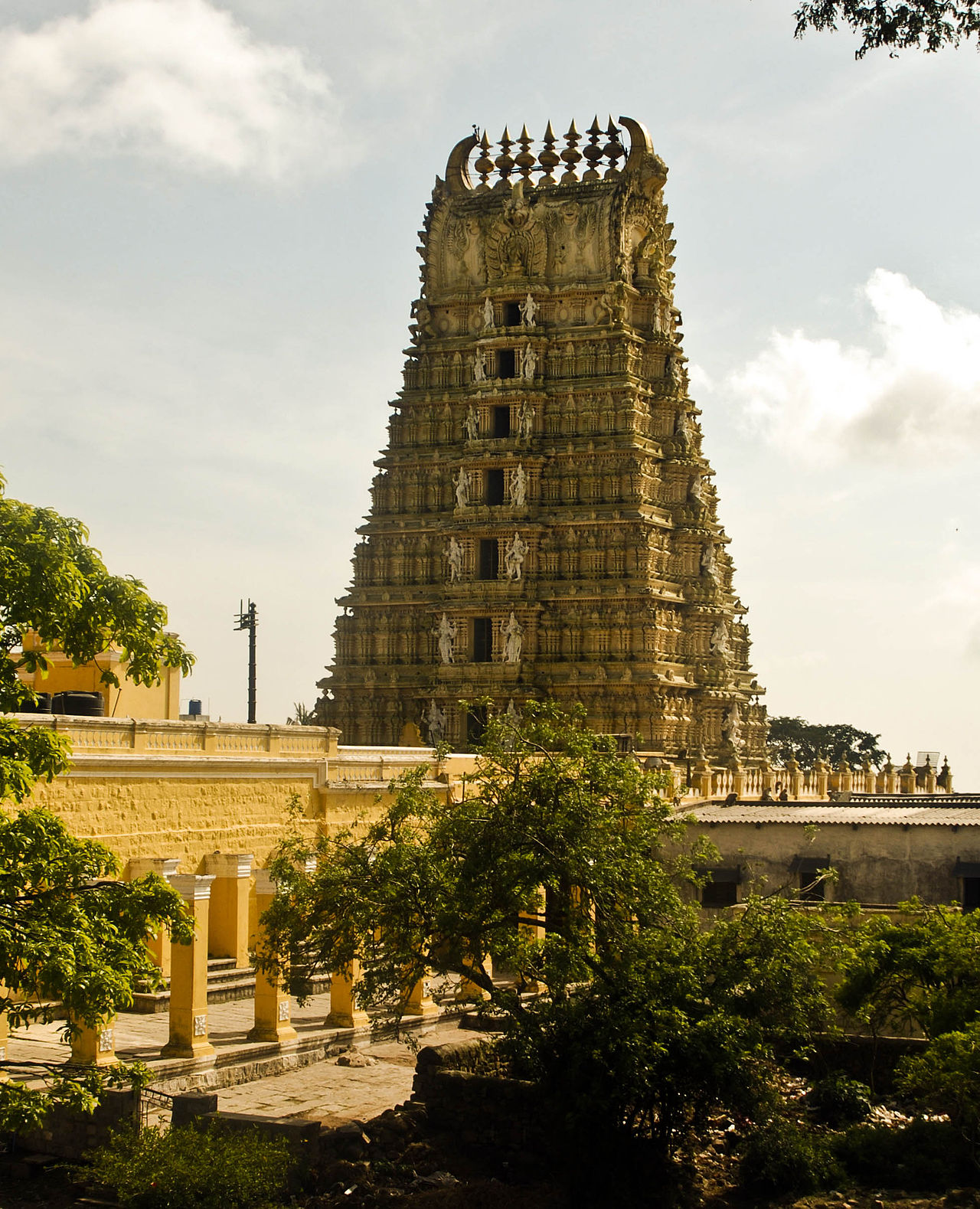
Shakti Peeth
Chamundeshwari Temple, Chamundi Hill, Mysuru
चामुंडेश्वरी मंदिर, चामुंडी हिल, मैसूरु
Location
Mysuru (Mysore), Karnataka
Darshan
–
Deity
🪔Maa Chamundeshwari — slayer of Chanda, Munda, and Mahishasura; patron goddess of the Mysore Wadiyar dynasty
Entry
Free entry
Temple open in three sessions: 7:30 AM–2:00 PM | 3:30 PM–6:00 PM | 7:30 PM–9:00 PM. Closed for midday break and brief evening break. Extended hours during Navratri/Dasara. Times approximate; verify locally.
Chamundeshwari is the patron deity of Mysuru and one of the most important goddess temples in South India. She is the Kula Devata (clan goddess) of the Mysore Wadiyar dynasty — Karnataka's historic royal family — and through that royal connection, has become the symbolic protectress of the entire Mysuru region and effectively of Karnataka as a state. The Dasara festival celebrated in her honour — the Mysuru Dasara (Nada Habba, "Festival of the Land") — is Karnataka's official state festival and one of India's most spectacular royal-era cultural celebrations, drawing national and international visitors and a television audience of tens of millions. The hill setting, the commanding presence of the temple on the horizon, the 1,008-step pilgrimage path, and the association with the slaying of the buffalo demon Mahishasura (who is said to have terrorised this very hill) give Chamundeshwari a place uniquely intertwined with the geography and identity of Mysuru.
History
The temple's origins trace to the Hoysala dynasty period (roughly 10th–14th century CE), which built the foundation of the current structure. Hoysala rulers were great builders of temples across Karnataka and were devotees of both Shaiva and Vaishnava traditions; Chamundeshwari's association with the hill predates their patronage, however. During the Vijayanagara Empire period (14th–17th centuries), the temple received further attention and patronage as part of the empire's support for major Karnataka shrines. The decisive period of the temple's elevation to its current grandeur was under the Mysore Wadiyar dynasty, particularly from the 17th century onward when the Wadiyars consolidated control over the Mysuru region and made Chamundeshwari the centrepiece of their religious identity. Today the temple is administered by the Muzrai Department (Department of Hindu Religious Institutions and Charitable Endowments) of the Government of Karnataka — the agency that manages thousands of Hindu temples across the state. The temple and Chamundi Hill are also associated with the Karnataka Rakshana Parishat (tradition of regional identity) and with Mysuru's status as the "City of Palaces."
06:00
Suprabhatam (Dawn Worship)
Pre-dawn awakening of the goddess; chanting of Suprabhatam verses; private ceremony conducted by priests before public darshan begins
07:30
Mangala Aarti (Auspicious Opening Aarti)
First aarti of public darshan; the main sanctum is opened; lamps, bells, and conches; first general darshan begins. Highly auspicious — devotees gather before 7:30 AM.
11:00
Rajopachara (Royal Worship)
Special royal-style puja with full Shodashopachara (sixteen offerings) as befitting the patron goddess of the Mysore Wadiyar dynasty. This mid-morning puja reflects the temple's historical connection to royal patronage.
17:30
Sandhya Aarti (Evening Aarti)
Atmospheric evening aarti as the sun sets over the Mysuru plain; the hilltop setting makes this particularly special — golden light on the gilded shikhara; lamps illuminating the goddess
20:00
Rathri Puja (Night Puja / Closing)
Final puja of the day preparing the goddess for rest; elaborate night worship; the sanctum is closed after this ceremony